
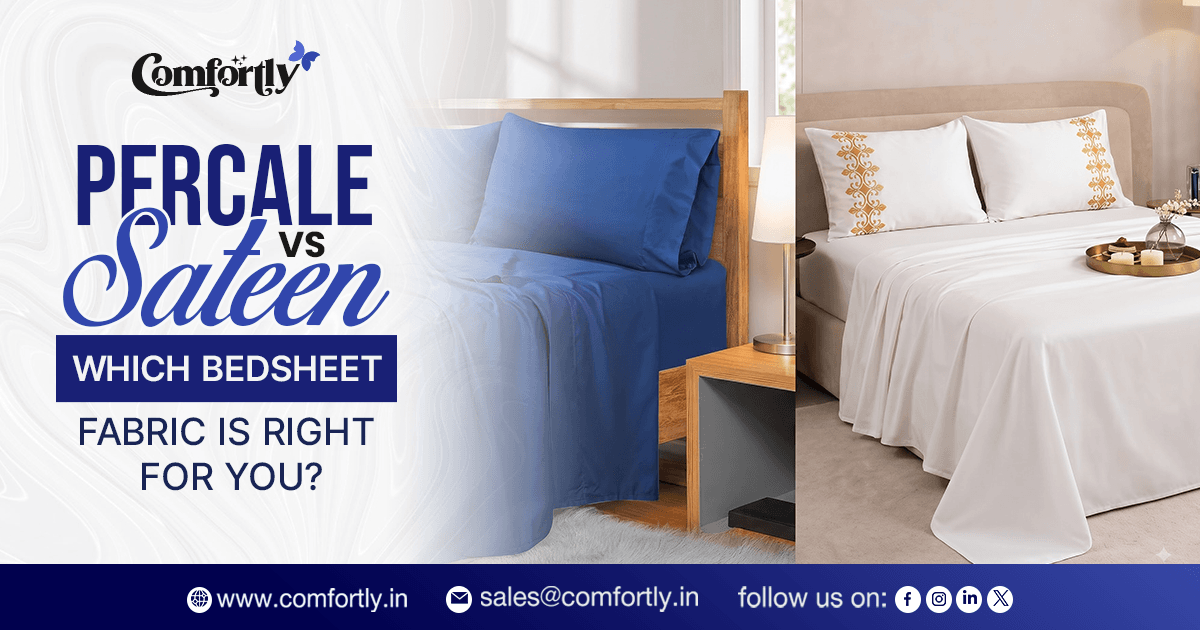

Choosing the right bedsheet can make a surprising difference to your sleep. When comparing a percale vs sateen bedsheet, the biggest difference comes down to how each fabric is woven and how it feels against your skin. Perc0ale is known for its crisp, cool, breathable feel, while sateen offers a smoother, silkier texture with a subtle sheen. Both are made from high-quality cotton and can provide excellent comfort, but the better choice depends on your sleeping habits, climate, and personal preference.
If you are shopping for new bedding and wondering whether to choose a percale bedsheet or a sateen bedsheet, this guide will help you understand the differences without getting lost in complicated textile terminology.
What Is a Percale Bedsheet?
Percale is a type of plain weave commonly used for premium cotton bedding. In a traditional percale weave, each horizontal thread passes over and under each vertical thread in a simple one-to-one pattern. This creates a tightly woven fabric with a clean, structured finish.
The first thing you may notice about percale bedding is its crisp texture. It has a fresh, airy sensation that many people associate with luxury hotel sheets. Unlike fabrics with a glossy finish, percale usually has a more matte appearance.
A good-quality percale bedsheet is also highly breathable. Air can move relatively easily through the fabric, helping excess heat escape during the night. This makes percale particularly appealing to people who tend to sleep warm.
Another interesting characteristic is that percale often becomes softer with repeated washing. Although it may feel slightly crisp when new, regular laundering can give the fabric a comfortable, lived-in softness while maintaining its characteristic texture.
What Is a Sateen Bedsheet?
Sateen is another popular cotton bedding fabric, but its weave is different from percale. It generally uses a one-thread-under-and-three-threads-over or similar arrangement, which places more threads on the surface of the fabric.
This weaving structure gives sateen its distinctive smoothness and gentle sheen. When you run your hand over a sateen bedsheet, it tends to feel softer and more silky than traditional percale.
Sateen bedding also has a slightly heavier drape. Instead of feeling crisp and lightweight, it tends to fall more naturally over the mattress and body. For sleepers who enjoy cozy, smooth bedding with a luxurious appearance, this can be a major advantage.
Because the surface is smoother and the weave is designed differently, sateen can also feel warmer than percale. That does not mean every sateen sheet is hot, however. Fiber quality, thread count, fabric weight, finishing treatments, and room temperature all influence the final sleeping experience.
Percale vs Sateen Bedsheet: Key Differences
When comparing percale vs sateen bedsheet options, it helps to look beyond thread count. The weave, fiber, finishing process, and overall fabric construction can have a greater effect on how the sheet feels.
| Feature | Percale | Sateen |
| Texture | Crisp and fresh | Smooth and silky |
| Appearance | Matte, clean finish | Subtle sheen |
| Breathability | Generally very breathable | Generally less airy |
| Feel | Lightweight and crisp | Soft and luxurious |
| Drape | More structured | More fluid |
| Temperature | Often cooler | Often warmer |
| Best for | Hot sleepers and warm climates | Cozy sleepers and cooler rooms |
| Style | Classic, hotel-like | Elegant and polished |
These are general characteristics rather than absolute rules. A lightweight sateen can feel cooler than a heavy percale, while a high-quality percale can become remarkably soft over time.
Percale vs Sateen Bedsheet: Which One Feels Better?
There is no universal answer because “better” depends on the sensation you prefer when you get into bed.
If you like sheets that feel crisp, clean, and cool, percale may be more appealing. The fabric has a distinctive freshness that can make your bed feel light and airy.
If you prefer bedding that feels smooth, soft, and almost silky, sateen may be the better match. Its surface has less of that crisp cotton sensation and more of a fluid, luxurious touch.
Think about the difference between a freshly pressed cotton shirt and a soft, smooth fabric with a slight sheen. That is a useful way to visualize the contrast.
Your sleeping environment matters, too. Someone living in a hot and humid climate may appreciate the airflow of percale, while someone sleeping in an air-conditioned or cooler bedroom might enjoy the cozy feel of sateen.
Percale vs Sateen: Which Is Better for Hot Sleepers?
For people who regularly wake up feeling overheated, percale is often an attractive option because of its breathable construction.
The relatively open nature of the plain weave allows air to circulate more freely. Combined with cotton’s natural moisture-handling properties, this can create a fresher sleeping environment.
Percale is especially suitable for warm weather, humid climates, or bedrooms where temperature control is limited. It also pairs well with lightweight blankets and breathable comforters.
Sateen can still work for hot sleepers, particularly if you choose a lightweight version made from breathable cotton. However, its smoother weave and slightly denser construction can retain more warmth compared with a lightweight percale fabric.
If temperature regulation is your number-one priority, start your search with lightweight, breathable percale rather than focusing exclusively on thread count.
Which Bedsheet Is Softer: Percale or Sateen?
Softness is one of the areas where sateen often has an immediate advantage.
A sateen bedsheet typically feels smooth straight out of the package because of its surface structure. Its silky texture can be especially appealing if you dislike the slightly crisp sensation of freshly laundered cotton.
Percale, meanwhile, has a different kind of comfort. It is crisp rather than silky. Over time, repeated washing can soften the fabric considerably without eliminating its characteristic texture.
So the question is not simply whether one fabric is softer. It is about what type of softness you prefer.
Choose sateen if you want:
- A smooth, silky hand feel
- A slightly warmer sleeping sensation
- A luxurious, draped appearance
Choose percale if you prefer:
- Crisp cotton texture
- Lightweight, breathable bedding
- A cool and fresh feeling
Durability and Everyday Use
Both percale and sateen can be durable choices when made from quality cotton and properly maintained.
Percale’s simple weave creates a balanced structure that is generally well suited to frequent washing. This is one reason it is commonly associated with hotel-style bedding and everyday use.
Sateen can also be long-lasting, although its surface structure can make it somewhat more susceptible to visible wear or snagging depending on the fabric quality and finishing.
The fiber itself matters enormously. A well-made long-staple cotton sheet can outperform a lower-quality sheet regardless of whether it uses percale or sateen.
When evaluating bedding, look at the entire construction rather than assuming a particular weave automatically guarantees superior durability.
Thread Count: Does It Matter for Percale and Sateen?
Thread count refers to the number of threads woven into one square inch of fabric. It is often marketed as a key indicator of sheet quality, but it should not be the only factor you consider.
A very high thread count does not automatically mean better bedding. Manufacturers may use different yarn sizes, weaving techniques, and counting methods, making direct comparisons difficult.
For both percale and sateen, consider:
- Fiber quality and cotton type
- Weave construction
- Fabric weight
- Finishing process
- Stitching and overall craftsmanship
A moderate thread-count sheet made from high-quality cotton can feel considerably better than a heavily marketed high-thread-count sheet made from inferior fibers.
This is particularly important when shopping online, where product descriptions can make thread count sound more important than it really is.
Which Fabric Is Better for Different Climates?
Your local climate can have a major influence on your bedding preference.
In hot or humid environments, percale is often a practical choice because its breathable structure encourages airflow. Its crisp finish also gives the bed a lighter feel during warm nights.
Sateen can be appealing in cooler environments because its smooth surface and slightly heavier feel provide a cozy sleeping experience.
However, climate is only one factor. Air conditioning, mattress materials, duvet thickness, sleepwear, and personal body temperature can all affect how warm or cool you feel.
If you live somewhere with changing seasons, you may even prefer to keep both fabrics available. A breathable percale set can work beautifully during warmer months, while sateen can provide extra coziness when temperatures drop.
Choosing a King Size Bedsheet: Does the Fabric Matter?
When buying a king size bedsheet, fabric selection becomes even more important because a larger sheet has more surface area and can noticeably influence the overall feel of your bed.
A poorly fitted sheet can bunch up, come loose, or create uncomfortable wrinkles regardless of the fabric. Before purchasing, measure your mattress, including its depth, and check the fitted sheet’s pocket dimensions.
For a king-size bed, consider:
- Mattress dimensions and depth
- Fitted-sheet pocket size
- Elastic quality
- Fabric construction
- Washing and care requirements
Percale king-size sheets can create a crisp, hotel-inspired appearance, while sateen king-size bedding can provide a smoother and more luxurious look.
The right choice should therefore combine fabric preference with proper sizing. Even the finest cotton sheet will not feel comfortable if it constantly slips off the mattress.
Care and Maintenance: Percale vs Sateen
Proper washing can significantly affect how long your sheets remain comfortable and attractive.
Percale is generally straightforward to maintain. Washing it according to the manufacturer’s instructions and avoiding excessive heat can help preserve its texture and prevent unnecessary fiber damage.
Sateen also benefits from gentle washing. Because of its smoother surface, using harsh detergents or excessively high temperatures may gradually affect its finish.
For either type of bedding, it is useful to:
- Follow the care label rather than relying on generic washing rules.
- Avoid excessive detergent, which can leave residue on the fabric.
- Use appropriate drying temperatures.
- Remove sheets promptly after drying to reduce wrinkles.
- Rotate between multiple sheet sets when possible.
For shoppers comparing products from brands such as Comfortly, checking the specific care instructions is worthwhile because fabric composition and finishing can vary between collections.
How to Choose Between Percale and Sateen
Still unsure which one belongs on your bed? Start with your sleeping habits rather than marketing claims.
If you regularly feel hot at night, enjoy crisp cotton, and prefer a lightweight bed, percale is worth considering.
If you enjoy silky textures, prefer a slightly warmer feel, and want bedding with a subtle sheen, sateen may suit you better.
Here is a simple way to narrow down the decision:
- Choose percale for breathability, crispness, and a cool sleeping experience.
- Choose sateen for smoothness, softness, and a cozy feel.
- Consider both if your preferences change with the seasons.
Remember that cotton quality matters just as much as weave. Two sheets with the same weave can feel completely different because of their yarn, finishing, weight, and manufacturing quality.
Final Verdict: Which Bedsheet Fabric Is Right for You?
The choice between percale vs sateen bedsheet ultimately comes down to the kind of sleeping experience you want.
Percale offers a crisp, breathable, lightweight feel that works particularly well for warm sleepers and hot climates. Sateen provides a smooth, silky texture, subtle sheen, and cozy drape that many people associate with luxurious bedding.
Neither weave is inherently right for everyone. Your ideal sheet depends on temperature preference, texture, climate, mattress size, maintenance habits, and the quality of the fabric itself.
If you want cool and crisp, explore percale. If you want smooth and silky, explore sateen. And if you’re still undecided, trying both over time can be the easiest way to discover which fabric feels most comfortable to you.
Frequently Asked Questions
1. Is percale cooler than sateen?
Generally, yes. Percale’s breathable plain weave tends to feel cooler and airier than sateen.
2. Is sateen softer than percale?
Sateen usually feels smoother and silkier, while percale offers a crisp cotton feel that softens with washing.
3. Which is better for hot sleepers?
Percale is generally a good choice for hot sleepers because of its breathable construction.
4. Does a higher thread count mean better sheets?
Not necessarily. Cotton quality, weave, yarn, and finishing can matter as much as or more than thread count.
5. Can I use percale or sateen for a king-size bed?
Yes. Both fabrics are available in king-size bedsheets. Just make sure the dimensions and mattress depth match your bed.
